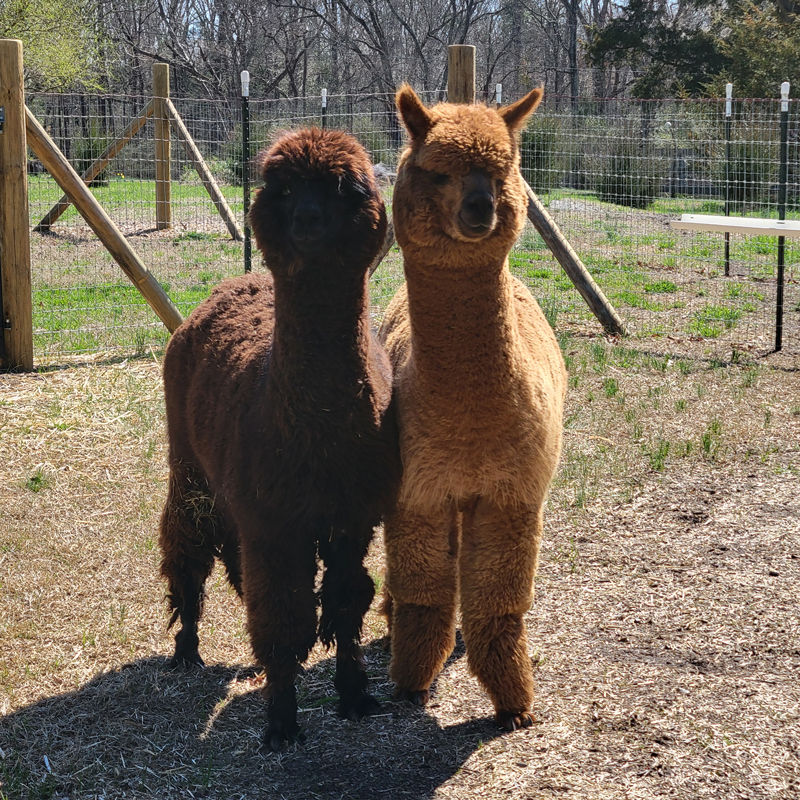
Based in Henrico, Virginia, 4 Mo'opunas Alpaca Farm proudly serves customers throughout the region and across the United States.
Frequently Asked Questions
Alpaca fiber is naturally hollow at the core, which means it creates tiny insulating air pockets — the same quality that makes it exceptionally warm for people makes it ideal for keeping eggs and hatchlings warm in a nest. It is also water resistant and able to wick away moisture, so nests stay dry through spring rain. Because alpaca fiber contains no lanolin, unlike sheep's wool, it is naturally soft without washing and easy for birds to pull apart and use. Chickadees, titmice, wrens, robins, and finches are all known to seek it out eagerly.
Chickadees, titmice, and other songbirds love and use alpaca fiber for nesting. It is particularly popular with songbirds and hummingbirds, who collect the fiber in spring to build their nests. Simply hang a nesting ball or basket from a tree branch near your existing feeders or bird bath for best results.
No, this is one of alpaca manure's biggest advantages over other fertilizers. Unlike cow and horse manure, alpaca manure does not need to be aged or composted before use. You can spread it directly onto garden plants without burning them. The nutrients in alpaca droppings break down gradually, providing a steady and long-lasting supply to plants — a slow-release feature that also reduces the risk of nutrient leaching.
No. Alpacas have a unique digestive system that breaks down weed seeds, preventing them from germinating. As a result, gardeners can use alpaca manure with confidence, knowing it will not contaminate their soil with weeds. This sets it apart from many other common manures.
Alpaca manure contains a well-balanced mix of nitrogen, phosphorus, and potassium. The core nutrients crucial for promoting strong root development, vibrant foliage, and robust flower and fruit production. It also improves the soil's ability to retain water, making it a rich soil conditioner as well as a fertilizer.
Yes. Unlike sheep's wool, alpaca fiber does not contain lanolin, making it less likely to irritate sensitive skin. The lack of lanolin also means it can be processed without the need for high temperatures or harsh chemicals. This is also why alpaca fiber is safe for birds and nestlings — no chemical treatments, no synthetics, just pure natural fiber straight from our herd.